
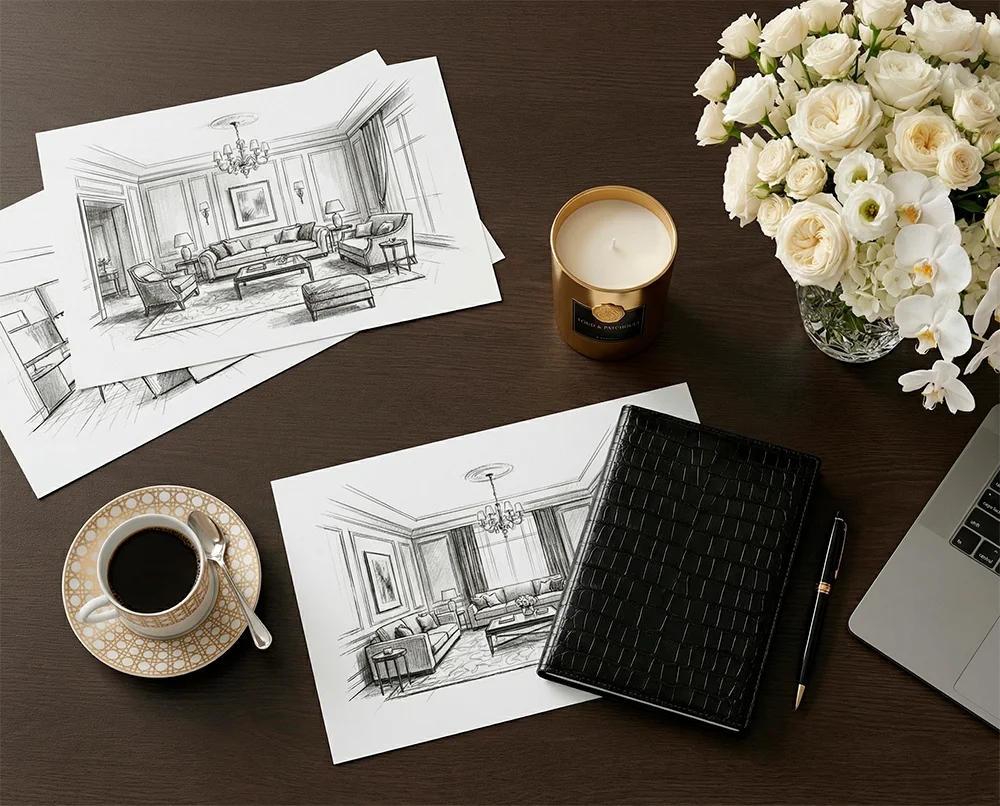
We live in a time when interior design has become visually oversaturated. Feeds are filled with flawless spaces, immaculate renders and endless variations of the same aesthetic language. Artificial intelligence has only accelerated this process: an image can now be produced in minutes. And yet the paradox remains — there are more beautiful images than ever, and fewer truly well-designed interiors.
Choosing an interior designer in 2026 is no longer about taste. It is about thinking, accountability and the ability to deliver a complex process through to a real, built result.
Why Portfolios No Longer Tell the Whole Story
Not long ago, browsing a portfolio was enough. Decisions were made intuitively, often instantly. Today, this approach is no longer reliable.
Renders look increasingly similar, styles blur into one another, and visual presentation often bears little relation to real-life execution.
A first warning sign is a portfolio made up exclusively of “perfect” images — spaces without signs of use, individuality or context. They may be visually appealing, but they reveal very little about whether a designer can work with reality.
A Real Designer Works with Problems, Not Pictures
A high-quality interior does not begin with an image. It begins with questions.
How do you live? What matters to you? Where do you rest, and where do you focus? How does your daily rhythm unfold?
If, during an initial meeting, a designer speaks mostly about style, trends and visual appeal, yet asks very little, this should raise concern. A professional first seeks to understand the person, and only then moves on to colours, forms and references.
How to Distinguish an Author from an Imitator
In an era of AI-generated imagery and visual templates, authorship has become particularly valuable. But authorship is often misunderstood. It is not a recognisable look — it is a consistent line of thinking.
A genuine author can:
- clearly explain why a specific solution is being proposed;
- reject a fashionable idea if it does not serve the space;
- design not a “style”, but a coherent system.
If a designer cannot articulate their decisions beyond vague references to intuition or current trends, you are likely dealing not with an author, but with a compiler.
Execution Matters More Than Concept
One of the most overlooked criteria when choosing a designer is experience in execution.
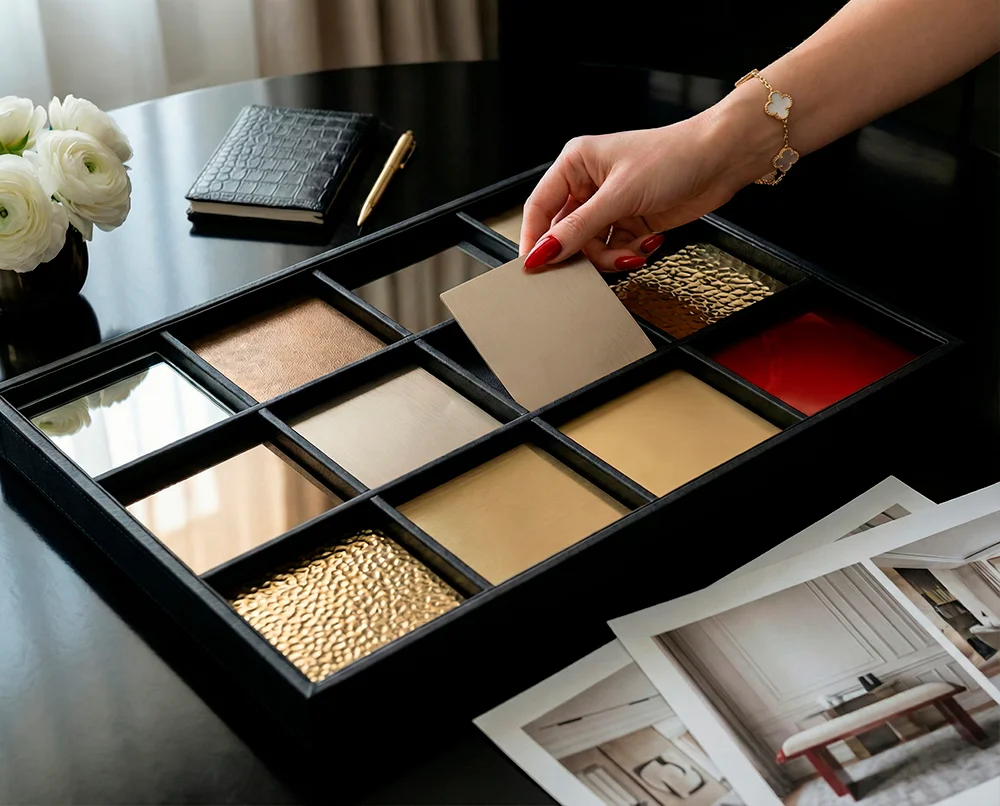
A strong designer understands how ideas translate into reality: which materials will be used, by whom, within what timeframes and with what risks.
Ask direct questions:
— Who oversees the project on site?
— How are problems handled when things go off plan?
— What happens when a contractor makes a mistake?
Clear, composed answers without abstraction are a strong indicator of professionalism.
How AI Has Changed the Profession — and Why That Is Not a Problem
Artificial intelligence has become a tool. Like any tool, it amplifies either expertise or its absence.
A good designer uses AI to accelerate workflows, explore options and test hypotheses. A poor one uses it to mask a lack of depth.
It is important not to fear AI, but to understand that a designer’s value today lies not in the image, but in the ability to think and make decisions.
Pay Attention to Language
The way a designer speaks about their work is one of the most telling indicators of quality.
A professional communicates clearly, calmly and without theatricality. They do not promise a “wow effect” or sell emotion. They speak about process, responsibility and choice.
If you are being sold a dream without a clearly explained path — you are being sold an illusion.
A Truly Expensive Interior Is Defined by the Absence of Rework
The most reliable measure of quality is not the project fee, but the number of corrections required after completion.
A good designer saves not money, but time, energy and emotional cost. Their decisions do not require constant revision because they are considered from the outset.
And Above All — Trust Without Illusion
Choosing an interior designer today is not a romantic alignment of tastes. It is a partnership.
A true professional does not aim to please. They aim to guide you towards the right decision — even when that decision is not the most visually striking.
In a world where any image can be generated, true value lies with the person who is willing and able to take responsibility for real space.
That is the designer worth choosing.